Showing posts with label Television. Show all posts

Sunday, 30 September 2012

Dr Who?


Is it a Police Box or is it...the Tardis?
On 23rd November 1963 (one day after the assassination of JFK) the McKenzie Trench-style police box began its journey from a functional and (back then) quite familiar item - as a telephone kiosk for the exclusive use of the police - to internationally recognised cultural icon.


On that date, a little after quarter-past-five in the afternoon, William Hartnell made his debut as the mysterious (and rather grumpy) Dr Who.  The early serials focused around his granddaughter, Susan Foreman (played by Carole Ann Ford) and her teachers, Barbara Wright (Jacqueline Hill) and Ian Chesterton (William Russell) who had inadvertently got themselves caught up in the Doctor's adventures.


The BBC launched the series as an educational tool - to guide children toward learning more about science and history. Older "children" came to love Bill Hartnell's irascibility and his habit of trying to cover momentary lapses in memory by shouting "Chesterton!" as though William Russell's character needed constant warning of imminent danger.

An extract from the first serial "An Unearthly Child".


Amazingly, the most significant moment in the history of Dr Who might not have happened had the Beeb had more stories at their disposal. Serial Two was ready to run and the only completed script was "The Mutants" written by Terry Nation.  The use of "bug-eyed monsters" had been strictly prohibited by commissioner, Sydney Newman, but, left with no fallback scripts they were obliged to allow Nation's Daleks to air on 21st December 1963.

Due to poor storage and the BBC's policy of wiping or recording over old tapes (no longer the practice), many of the early shows have been lost. Included among these missing gems is part four of 1966's serial Tenth Planet, in which the first Doctor (Hartnell) "regenerates" into Doctor number two (Patrick Troughton).

Regeneration turned out to be a stroke of genius and a vital element in the programme's enduring success. Each new Doctor can bring his own slant, his own unique imprint to the character. How different is the current Doctor, played by Matt Smith from William Hartnell's original (and not just in terms of age - Smith took on the role aged 27, Hartnell was 55).

The Doctor is a Gallifreyan Sherlock Holmes - not quite one of us, but knowledgeable, ingenious, resourceful and fearless. With incorruptible moral fibre, whatever villains threaten, he will stand up to them and outwit them in the end.
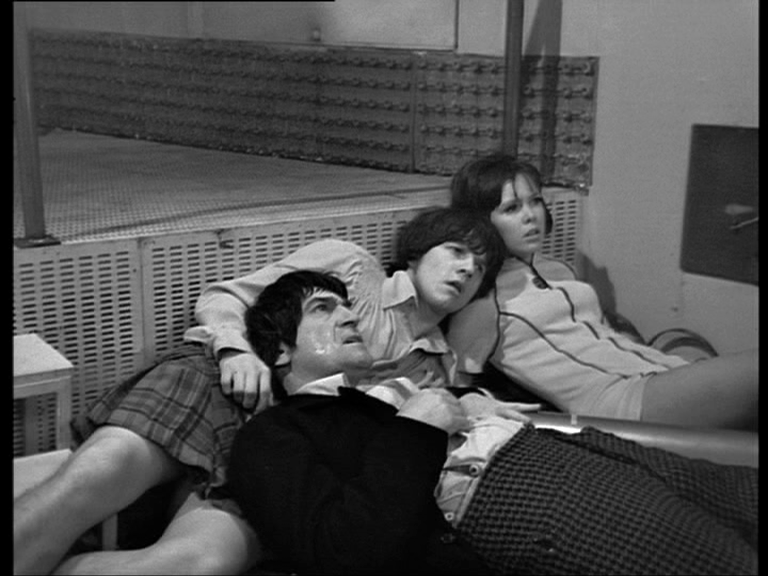
Doctor's assistants Jamie McCrimmon (Frazer Hines) and Zoe Heriot (Wendy Padbury) compete for shortest skirt.

There have, so far, been eleven TV Doctors - which one is your favourite?
 

Friday, 28 September 2012

Andy Williams - may each day of the week be a good one...


'Depending on your age and race, Andy Williams' 1961 rendition of "Moon River" was either a transcendent embodiment of timeless beauty, or one of the more conservative, white-bread recordings of its time. Either your Christmas sparkled brighter because of his annual TV special, or it ruined an otherwise relaxing night. You loved or hated his taste in sweaters.'  (Los Angeles Times obit 26th Sept 2012)
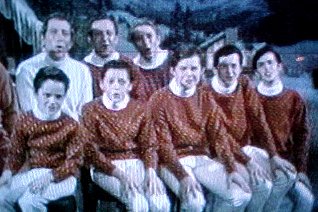
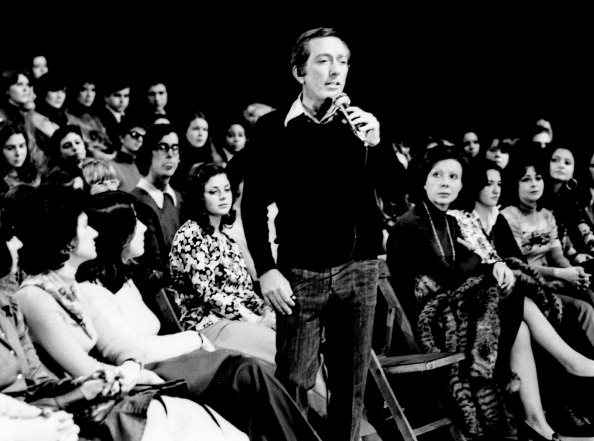
Andy Williams - educating the Osmond Brothers in The Way of the Sweater.

Whilst most nostalgia for the 1960s revels in images of hippiedom, Woodstock and Swinging London, there was also a more "conservative" aspect - the cosy sixties, if you like - which thrived and contributed to the bipolar culture of the decade.
Andy Williams with his first wife, Claudine Longet and their three children.
Andy Williams represented a sixties that, rather than kicking against the previous generation, saw itself as the natural progression from them... more stylish, more laid back. Along with Burt Bacharach, Andy Williams stood for the kind of sixties your parents would be glad to have you bring home.


Having started his singing career, aged 8, as one of the  Williams Brothers Quartet, (their first hit being "Swinging on a Star", recorded with Bing Crosby in 1944), Andy Williams's solo career gained him international fame and his own weekend variety show. 

The Andy Williams Show was so successful it was imitated by stars on both sides of the Atlantic (all of us of a certain age will either experience a glow in the stomach or a throbbing in the temples at the mention of The Val Doonican Show - one of the imitators).


The show featured a comforting standard format - songs, comedy (gently humorous sketches, featuring the host), and a weekly guest star).  This last slot gave opportunities to a surprising range of up and coming acts including The Carpenters, but most significantly, introduced many black American acts to a wider audience (included here, The Temptations, The Supremes, Gladys Knight and the Pips).
Andy with Sonny and a pre-op Cher - hands up if you preferred her that way.

Politically, Williams was friend and supporter of the Kennedys, and would later lead protests against plans by the Nixon administration to deport John Lennon.


This sense of personal integrity and loyalty was also evidenced when, in 1976, his by then ex-wife, Claudine Longet was charged with shooting dead her boyfriend. Andy Williams not only testified as to her character, but also financed her legal backing and escorted her to court appearances.


Andy Williams may have represented a less edgy and far from iconoclastic aspect of the sixties, but the legacy of the man and of his music provides much to be admired.